
Content Management & Revision Tracking Tool
An enterprise content management application designed to simplify editing, revision tracking, and workflow management for training content teams.
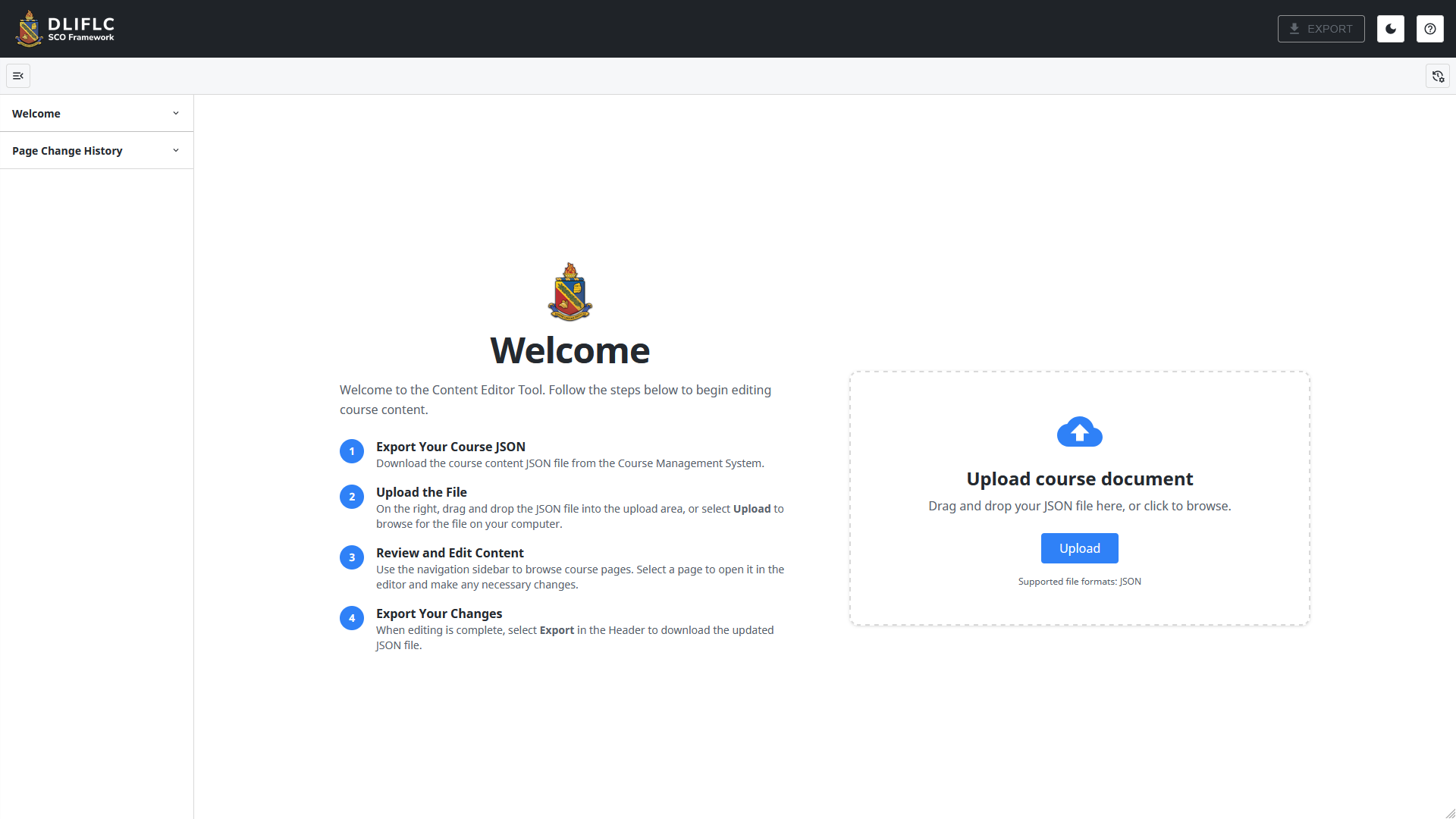
Content Management & Revision Tracking Tool was developed to streamline content editing workflows for training and instructional design teams. The application centralizes content editing, revision management, export generation, and workflow support into a single interface, providing a more efficient and maintainable process for managing large training programs.
Why I Built It
The Content Tool was created to address long-standing workflow challenges within a training content development environment. The need for a centralized editing and revision management system had been identified by stakeholders for several years, but existing workflows relied heavily on manual processes.
Content updates, revision tracking, and reporting were handled through multiple disconnected steps that made large-scale content maintenance difficult and time-consuming.
Key Features
- Schema-driven content editing
- Revision tracking and audit history
- Change comparison and review workflows
- Automated revision report generation
- Multilingual content support
- Dynamic content structures and templates
- Offline persistence and recovery
- Rich text content editing
- Content export and reporting tools
Design Challenges
Building the Content Tool required solving several complex state-management and data-modeling problems:
- Translating generic CMS paths into readable change log labels
- Synchronizing React Hook Form and Redux state
- Tracking revisions across deeply nested content structures
- Detecting and reporting structural content changes across revisions
- Managing offline persistence with IndexedDB
- Generating human-readable revision reports
- Maintaining performance across large content documents
System Architecture
The application is built around a schema-driven architecture that separates content definitions from editing and presentation logic.
- React for the user interface
- Redux Toolkit for application state management
- React Hook Form for content editing workflows
- Yup for schema validation
- IndexedDB for local persistence
- Draft.js for rich text editing
- Material UI and Tailwind CSS for the user interface
The architecture centralizes template definitions, validation rules, and workflow behavior, making new content templates easier to support while preserving a consistent editing experience.
Lessons Learned
Developing the Content Tool reinforced the importance of predictable state management when working with large, schema-driven applications. Implementing revision tracking required careful handling of nested data structures, dynamic form paths, and change detection logic across multiple layers of application state.
The project also highlighted the challenge of making highly generic CMS data understandable in a revision report. The source content model was flexible enough to support many templates, but its raw structure did not provide meaningful labels for reviewers.
To bridge that gap, the application introduced a dynamic labeling system for the change log. Label schemas defined how containers, arrays, and leaf nodes should be described, allowing revision reports to present technical content paths as readable, reviewer-friendly change summaries.
Future Development
Potential future enhancements include:
- Additional workflow automation
- Expanded reporting capabilities
- Enhanced content review processes
- Improved collaboration features
- Additional template and content type support
- Deeper workflow analytics